

This is Flavor Profile, a series where we look at ingredients that are similar to each other, in some cases even interchangeable.
We’ll talk about how they’re alike, but – more importantly – what makes them distinct.
This is a flavor profile on: braising greens.
Braising greens are dark, leafy greens that are generally pretty tough and are more often than not cooked low-and-slow instead of eaten raw.
Braising is a cooking method where you start with a quick sear, then follow up with long cooking in a liquid.
While these aren’t all from the same family, they are often found directly next to each other at the grocery store and look very similar. I have picked up the wrong one in the past if I’m not carefully paying attention.
Today we’re looking at…
- kale
- collard greens
- mustard greens
- chard
Since all of these greens are cooked pretty much the same way, you’ll find they substitute for one another pretty well in many dishes. BUT – the flavors they provide can be WILDLY different, so you’ll want to be mindful when doing so.
Let’s break it down…
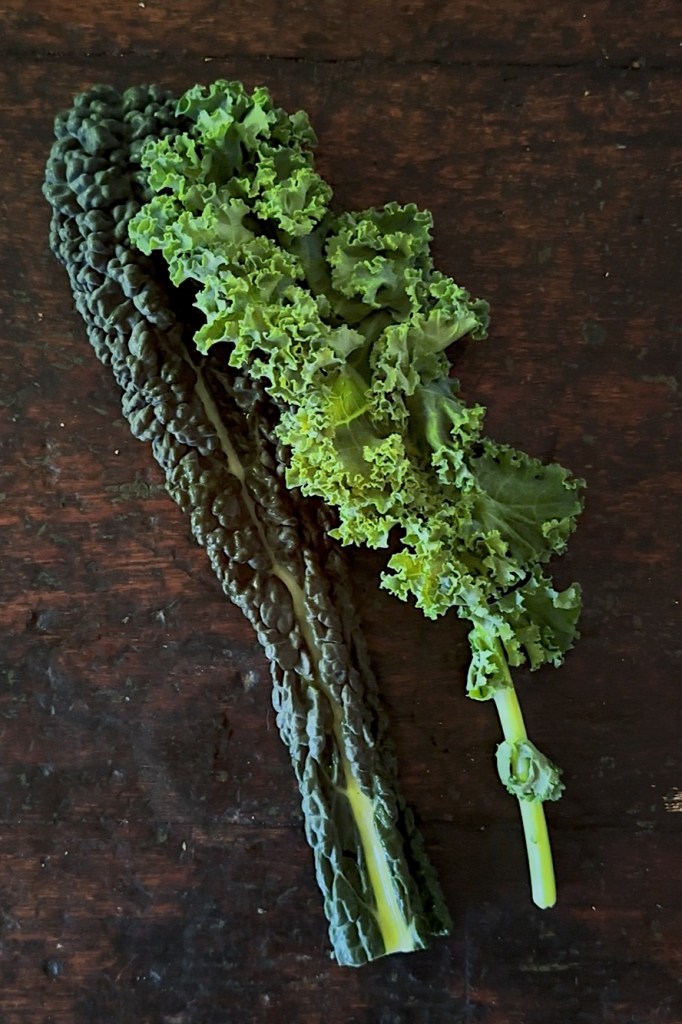
Kale
Probably the most well-known green in this list, kale is a leafy member of the brassica family (like broccoli and kale). Its many cultivars range from curly to flat, but full grown kale leaves are often too tough to eat raw. Like many listed above, kale is mildly peppery and bitter when raw, but has a nuanced almost sweet flavor when fully cooked. It cooks relatively quickly BUT can also handle a long cook better than something like a chard.
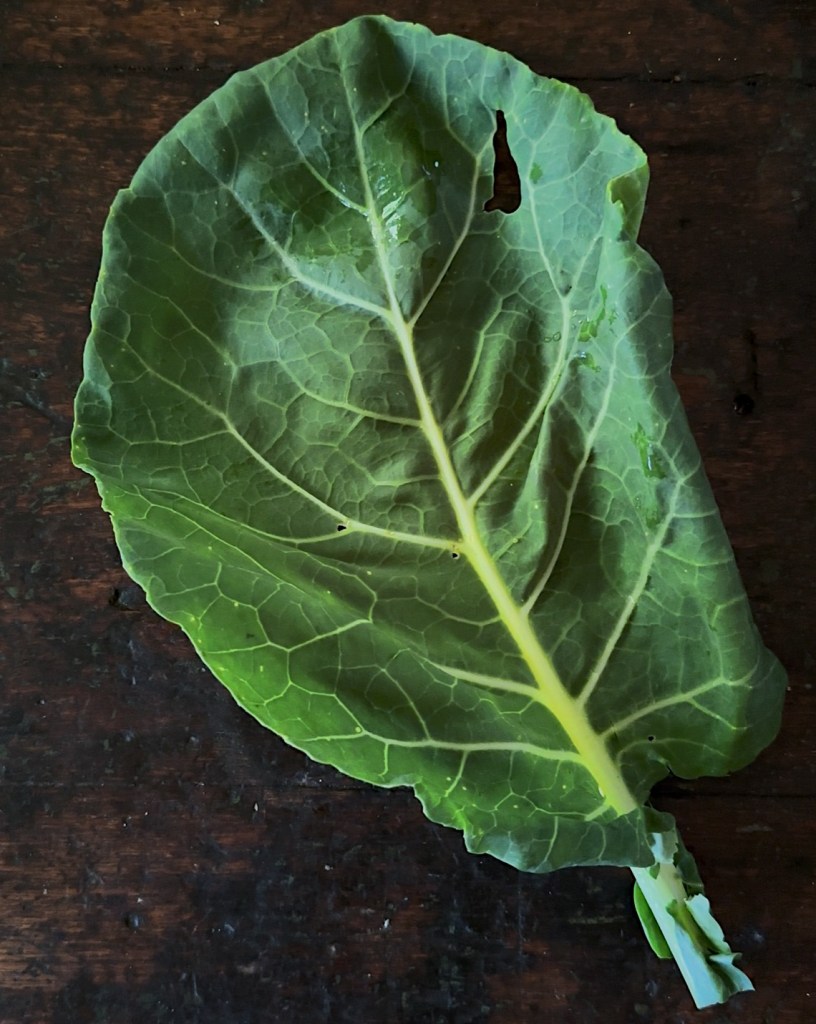
Collard Greens
A thick, leafy green from the brassica family . It’s a deep green color with almost waxy, tough leaves – they can be bitter when raw due to high sulfur content. However, when cooked for a long time they become tender and the bitterness goes away (especially when you cook it with acid or heat). They are earthy and really pick up the flavor of anything you cook them with. In Southern US cooking they are conventionally slow cooked with smoked meats and onions.
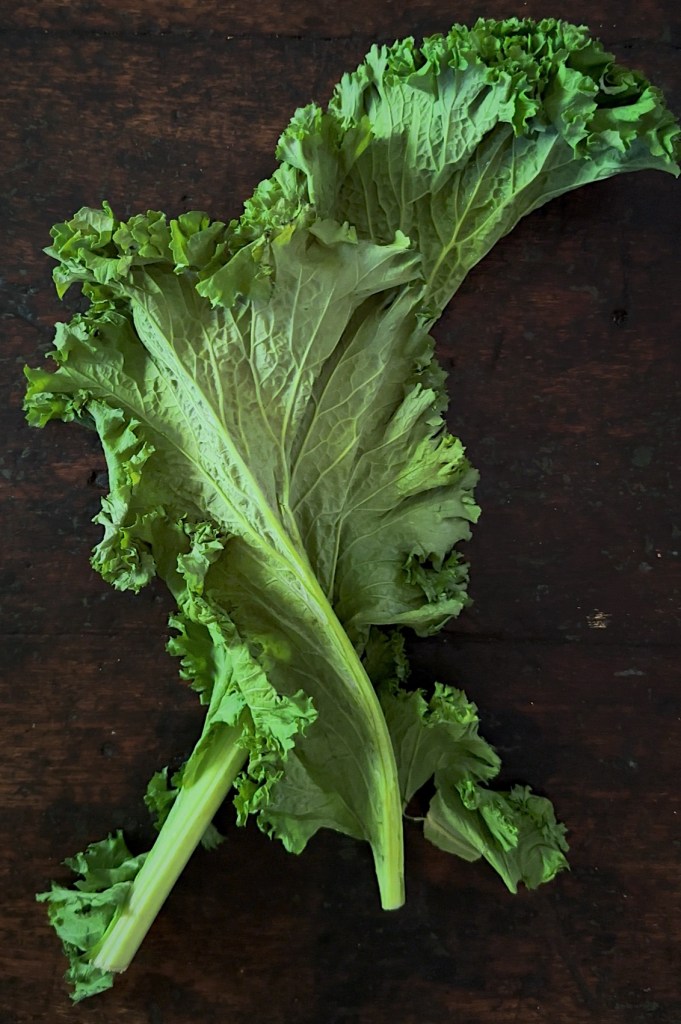
Mustard Greens
A lighter green leaf, mustard greens are also from the brassica family and hail from the same plant as mustard seeds. Compared to the others in this list, mustard greens have a VERY distinct flavor. Punchy, peppery, and strong, some compare their flavor to horseradish, although cooking does mellow it out a bit. They can easily overpower other flavors, so make them the central ingredient.

Chard
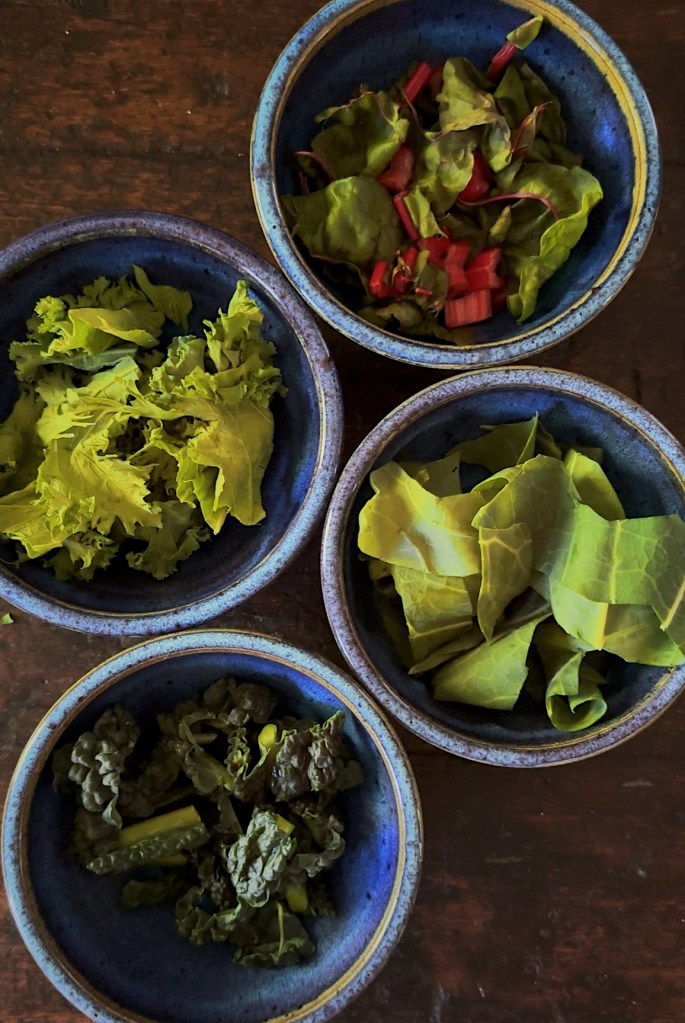
A leafy green from the beet family. It comes in a bunch of bright colors, from orange to white to bright pink. If you cook them quickly, the colors can stay, but when cooked low-and-slow (like we’re discussing today) the color will leach out. Of all the greens we’re discussing today, chard is the most delicate and can be cooked for the shortest amount of time. Since it’s in the beet family, it has a deep, earthy flavor (that detractors might say tastes like dirt – I’ll let you decide).
So – where are they distinct and where can we swap them out?
If your cooking time is pretty short, stick with chard or kale (and tear out any tough kale stems). Both will taste good and handle a short cook time without textural issues.
If you want a green to handle a LONG cooktime, collards are your go-to. A thick-leafed kale can be subbed in, or mustard greens BUT I’d add less than the recipe calls for with those. They overpower flavors easily.
If your recipe explicitly calls for mustard greens, know that none of the others will back the same punch. Add kale and some stone ground mustard or horseradish to get the kick, if you can.
I find that kale is the most widely available of all the above, and is the most versatile if you’re looking to find a substitute. But each has its own distinct flavor and shouldn’t be instinctively swapped out.
Do you like educational food content, but prefer a video format? Check out the video form of this blog on our socials…
 Cara Can Cook